
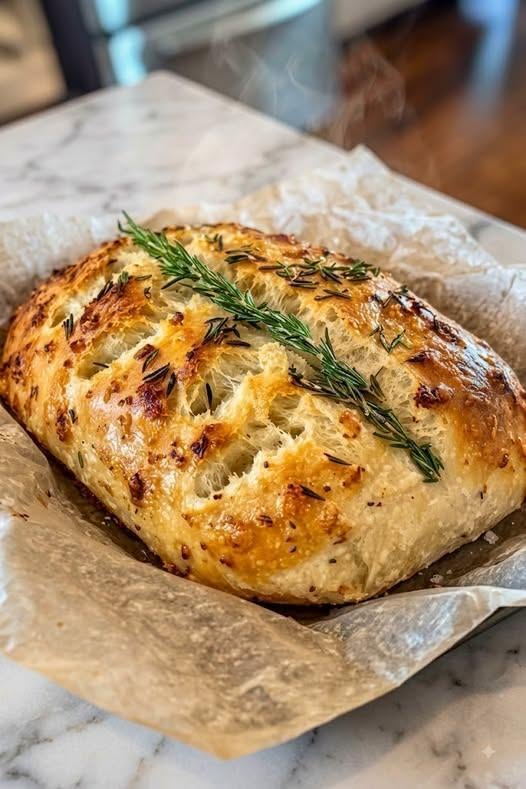
If you love the smell of freshly baked bread but don’t want to spend time kneading dough, this No-Knead Homemade Bread is the perfect recipe to try. It uses simple ingredients and a long resting time to develop flavor while requiring very little hands-on work.
With a crisp golden crust and a soft, tender center, this bread is wonderful for sandwiches, toast, soups, or simply enjoying warm with butter.
What Is No-Knead Homemade Bread?
No-Knead Homemade Bread is made without the traditional kneading process. Instead, the dough rests for several hours, allowing the flour, water, and yeast to naturally develop structure and flavor.
The result is rustic bread with a crisp crust and a soft, chewy interior.
Why You’ll Love No-Knead Homemade Bread
- No Kneading Required
You simply mix the ingredients together and let time do most of the work.
- Simple Ingredients
You only need flour, yeast, water, salt, and a little olive oil.
- Crispy Golden Crust
Baking at a high temperature helps create a beautifully crisp crust.
- Soft Interior
The long resting period helps develop a light and chewy center.
- Beginner-Friendly
There is no complicated bread-shaping technique required.
- Perfect for Any Meal
Serve it with breakfast, lunch, dinner, or as a snack.
- Better Than Store-Bought
Fresh homemade bread has a wonderful aroma and texture that makes it worth the wait.
Ingredients
3 cups all-purpose flour
1½ cups warm water
1 tsp instant yeast
1½ tsp salt
1 tbsp olive oil
1 tsp honey or sugar, optional
How to Make No-Knead Homemade Bread
Step 1: Combine the Dry Ingredients
Add the flour, instant yeast, and salt to a large mixing bowl. Stir until evenly combined.
Step 2: Add the Water
Pour in the warm water and olive oil. Add honey or sugar if using.
Mix with a wooden spoon or spatula until a sticky, rough dough forms.
There is no need to knead the dough.
Step 3: Let the Dough Rise
Cover the bowl tightly with plastic wrap or a clean kitchen towel.
Let the dough rest at room temperature for approximately 8–12 hours, preferably overnight.
The dough should become noticeably larger and bubbly.
Step 4: Shape the Dough
Lightly flour your work surface. Carefully transfer the dough onto it.
Fold the dough over itself a few times to create a rough round shape. Avoid adding too much flour because the dough should remain slightly sticky.
Step 5: Rest Again
Cover the dough and let it rest for about 30–45 minutes while you prepare the oven.
Step 6: Preheat the Oven
Place a Dutch oven with its lid inside the oven.
Preheat to 450°F (230°C) for about 30 minutes.
Step 7: Bake
Carefully transfer the dough into the hot Dutch oven.
Cover with the lid and bake for 30 minutes.
Remove the lid and continue baking for another 10–15 minutes, or until the crust is deep golden brown.
Step 8: Cool
Carefully remove the bread from the Dutch oven and place it on a wire rack.
Let it cool for at least 30–60 minutes before slicing.
Tips for Perfect No-Knead Homemade Bread
Use the Right Water Temperature
The water should be warm, not extremely hot. Very hot water can interfere with the yeast.
Don’t Add Too Much Flour
No-knead dough is naturally sticky. Adding excessive flour can make the finished bread dense.
Give the Dough Enough Time
The long resting period is important because it allows the dough to develop flavor and structure.
Preheat the Dutch Oven
A very hot Dutch oven helps create steam around the dough, which contributes to a crisp crust.
Let the Bread Cool
It can be tempting to slice immediately, but allowing the bread to cool helps the interior finish setting.
Can I Use Whole Wheat Flour?
Yes. You can replace part of the all-purpose flour with whole wheat flour. Start by replacing about ½–1 cup and adjust the water if necessary.
Using too much whole wheat flour can make the loaf heavier.
Delicious Variations
Garlic Herb Bread
Add dried rosemary, thyme, oregano, and minced garlic to the dough.
Cheesy Bread
Fold shredded Parmesan or cheddar into the dough before the final rest.
Rosemary Bread
Add fresh rosemary and a little extra olive oil for a fragrant loaf.
Seeded Bread
Add sunflower seeds, pumpkin seeds, sesame seeds, or flaxseeds.
Cinnamon Raisin Bread
For a sweeter version, add raisins, cinnamon, and a little extra honey.
How to Store Homemade Bread
Once completely cooled, store the bread at room temperature in a bread bag or loosely covered container for up to 2–3 days.
Avoid storing freshly baked bread in the refrigerator because it can make the texture stale more quickly.
Can You Freeze No-Knead Bread?
Yes. Slice the cooled loaf and place the slices in a freezer-safe bag or container.
Freeze for up to 2–3 months. Toast individual slices directly from frozen or allow them to thaw at room temperature.
Frequently Asked Questions
Can I let the dough rise overnight?
Yes. An overnight rise of about 8–12 hours works very well and develops excellent flavor.
Why is my dough so sticky?
No-knead dough is supposed to be sticky. If it is extremely wet, lightly flour your hands and work surface rather than adding large amounts of flour.
Can I make this without a Dutch oven?
Yes. A covered oven-safe baking vessel that can withstand high temperatures can work. The covered environment helps trap steam around the dough.
Why is my bread dense?
Dense bread can result from insufficient rising time, inactive yeast, too much flour, or cutting the bread before it has cooled.
MORE RECIPES HEREhttps://thoughthubb.com/
FOLLOW US ON PINTERESThttps://www.pinterest.com/abbasitalal37/
Leave a Reply